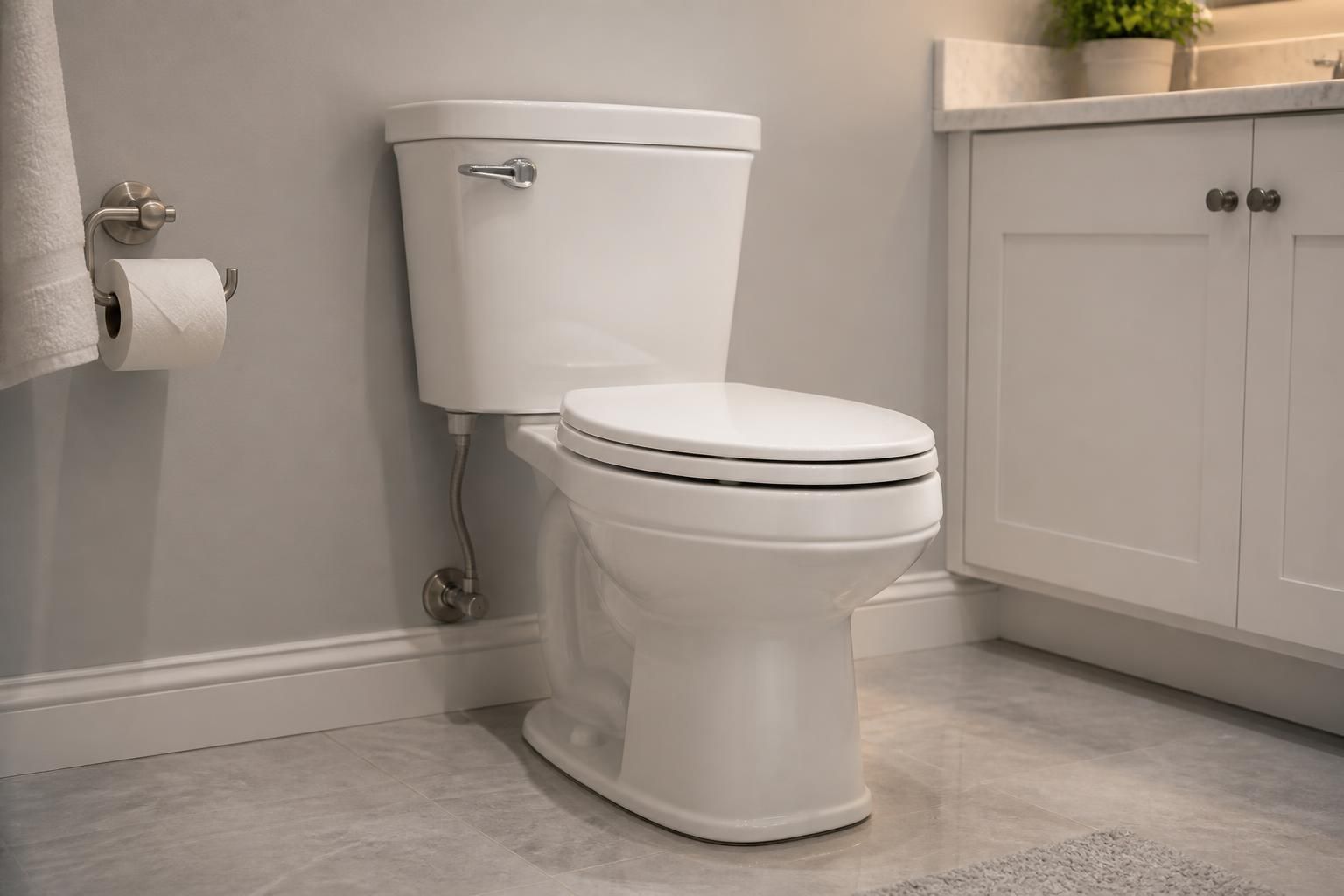
A toilet that keeps running, rocks at the base, or refuses to flush can throw off the whole day. If you are hearing water move after the tank fills, seeing moisture around the bowl, or dealing with repeated clogs, it is time to have the problem checked before it gets worse.
Copperline Plumbing & Drain handles toilet repair for homeowners across Austin, TX, with clear attention to the symptoms you can see and the parts that often cause them. We look at the bowl, tank, supply line, and seals so you can get back to a toilet that works the way it should.
Toilet trouble usually starts with small signs that are easy to ignore. A weak flush, a tank that keeps refilling, or water around the base may seem minor at first, but each one points to a specific part of the fixture that needs attention.
Some issues show up only when you use the toilet a certain way. Others are constant, such as a trickle of water that never stops or a handle that feels loose every time you press it.
When one of these signs appears, we start by narrowing down whether the concern is inside the tank, at the connection to the water line, or at the seal where the toilet meets the floor.
Toilet repair is usually about finding the exact point where performance changes. A flapper that does not seat, a fill valve that keeps feeding water, or a worn wax seal can create very different symptoms, even though the toilet looks normal from the outside.
The tank holds the pieces that start and stop the flush. If the flapper, chain, fill valve, or flush lever is worn or out of place, the toilet may waste water, flush weakly, or stop short before the bowl clears.
Water at the floor can point to a seal issue, a loose setting, or another connection problem. We check whether the toilet shifts when used and whether moisture is coming from the tank, supply line, or base.
The line that feeds the toilet can develop leaks at the valve or connection points. Even a small drip can damage flooring if it is left alone, so we look closely at the fitting and the surrounding area.
Every toilet issue is a little different, but the repair process usually follows a clear path. That helps you understand what is happening and what parts may need to be replaced or adjusted.
This approach helps prevent guesswork. Instead of swapping parts blindly, we focus on the specific reason the toilet is acting up.
A toilet that keeps running is more than an annoyance. It can sound like a steady trickle, a repeated refill, or a tank that never quite settles. The source is often a tank part that is not sealing, closing, or filling at the right time.
Noise can also point to a fill valve issue. If the valve is cycling too often or making sharp sounds during refill, the toilet may need a part replacement or adjustment. A handle that sticks or a chain that is too tight can create similar symptoms.
If the handle lifts loosely, catches, or does not return cleanly, the flush mechanism may not be opening the flapper all the way. That can lead to incomplete flushes and repeated presses, which puts more wear on the toilet.
We check for simple alignment problems first, then move to the parts that control the flush cycle. Many running-toilet complaints come down to one worn piece inside the tank.
Water around the bottom of a toilet should never be brushed aside. Sometimes it appears only after flushing. Other times it shows up as a damp ring that keeps returning. Either way, the source needs to be traced before moisture spreads to the floor.
A base leak can come from a failed seal, a loose toilet, or another issue that lets water escape where the toilet meets the floor. If the toilet wobbles when you sit down or stand up, that movement can make the leak worse.
We look at the toilet setting, the supply line, and nearby connections to find out where the water is coming from. Once the source is clear, the repair can target the part that actually failed instead of covering up the symptom.
Some toilets clog because of what went into the bowl. Others clog because the toilet is not moving waste through the trap the way it should. A weak flush can leave tissue behind, cause the bowl water level to behave oddly, or make the toilet need multiple attempts.
When a toilet keeps clogging, the issue may be limited to that fixture rather than the rest of the home. That is why it helps to note whether the problem happens with one toilet or several. We use that information to separate a fixture problem from a broader drainage concern.
Toilet repair at this stage is often about restoring the flush action and checking whether internal parts are limiting the water release.
A few simple observations can make the repair go smoother. You do not need to take anything apart. Just note what the toilet is doing and when it started.
That kind of detail helps us move faster once we are there. It also makes it easier to decide whether the issue is a tank part, seal, connection, or another toilet-specific problem.
Homes across Austin, TX can deal with a wide range of toilet issues, from simple worn parts to leaks that need immediate attention. Copperline Plumbing & Drain works with homeowners who want a practical repair and straightforward communication from start to finish.
If your toilet is running, leaking, clogging, or just not behaving the way it used to, we can take a closer look and get the fixture back on track. You can reach us at +15125550101 or hello@copperline.example.
A running toilet usually means one of the tank parts is not sealing or shutting off at the right time. The flapper, fill valve, chain, or handle may need adjustment or replacement.
Water at the base often points to a failed seal, a loose toilet, or a connection problem near the supply line. The source has to be traced carefully because the water can appear in one spot while coming from another.
Multiple flushes can happen when the tank is not releasing enough water or when the bowl is not clearing well. A worn part inside the tank often plays a role.
Yes. A toilet can clog because of a partial blockage, weak flush action, or an internal issue that makes the bowl clear less effectively.
Long refill sounds often point to a fill valve issue or a water level problem inside the tank. The tank may be taking longer than normal to reset after each flush.
It is better to have a wobbly toilet checked soon. Movement can affect the seal at the base and may lead to leaks or floor damage if left alone.
Get Started
Tell us what is happening at your property, and we will help you determine the right service for the issue, whether it is a stubborn clog, a leak, a damaged line, or a fixture that is not working properly.