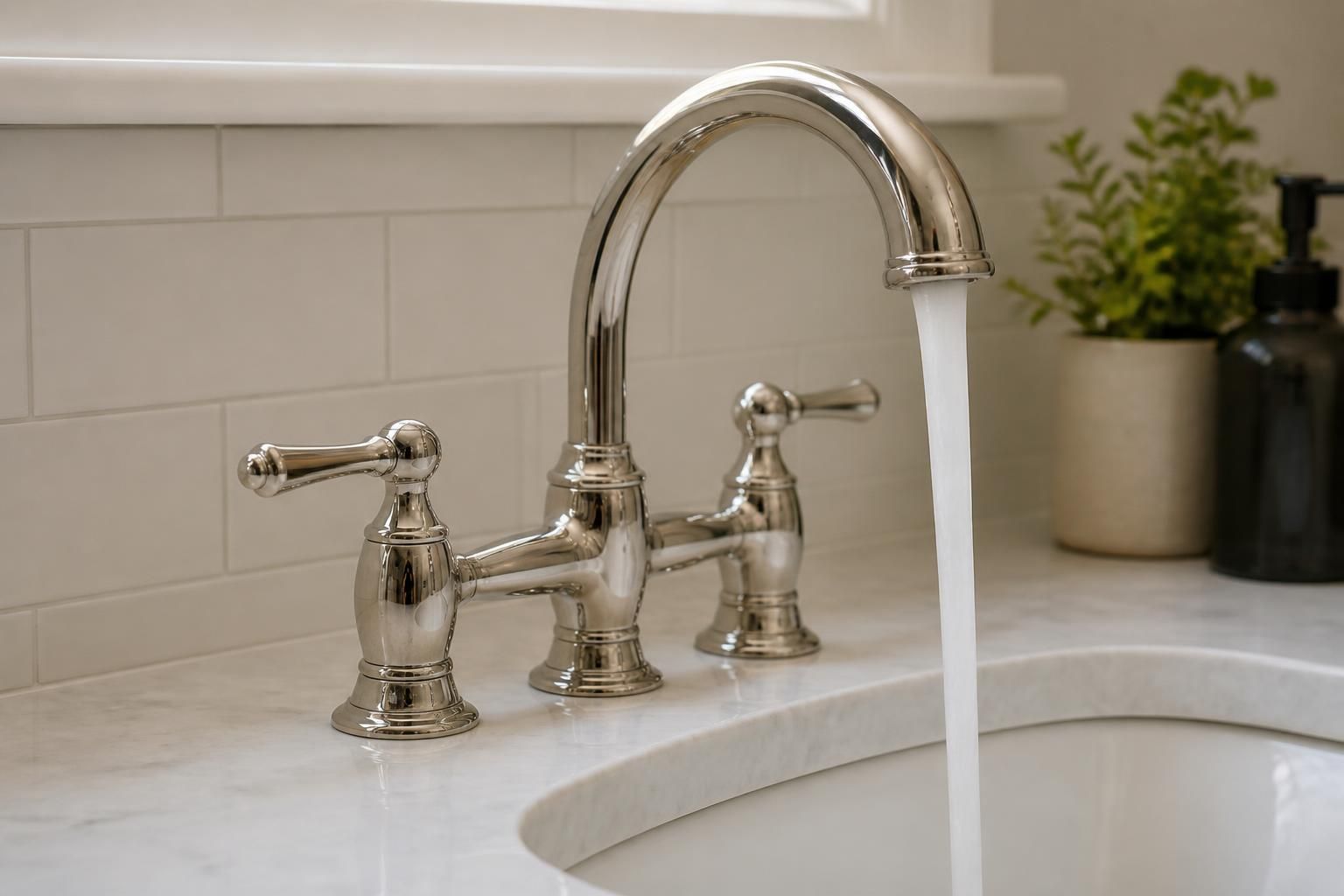
A dripping faucet can waste water, keep you awake, and leave mineral spots on sinks and fixtures. If the handle feels loose, the water pressure looks uneven, or the spout keeps running after you shut it off, it is time to take a closer look.
Copperline Plumbing & Drain helps homeowners across Austin, TX fix faucet problems before they turn into bigger repairs. We handle worn washers, damaged cartridges, leaking bases, stuck handles, and other faucet trouble with clear communication and practical repair work.
Many faucet problems start small. A slow drip or a handle that takes extra force may not seem urgent, but those symptoms often point to worn internal parts or a seal that no longer holds.
Watch for these common signs that your faucet needs attention:
If the faucet is slowing down your routine, we can diagnose what is going on and recommend a repair that fits the fixture, not a one-size-fits-all fix.
Faucet leaks usually come from worn internal components rather than a single major failure. A seal can age, a cartridge can crack, or debris can keep a valve from seating the way it should. The result may be a drip at the spout or moisture where the faucet meets the sink.
Daily use takes a toll on moving parts. Handles loosen, O-rings dry out, and washers flatten over time. Once those parts stop sealing well, water can escape even when the faucet appears shut.
Mineral deposits can collect inside the faucet body and around the aerator. That buildup can narrow the water path, alter spray patterns, and make handles harder to turn.
Sometimes the issue is not inside the faucet at all. A loose mounting nut, supply line connection, or base seal can create a leak below the sink or around the fixture.
Different faucet styles call for different repair methods. We look at the fixture, the symptom, and the condition of the parts before deciding what should be replaced or adjusted.
Many modern faucets rely on a cartridge to control water flow and temperature. If it is worn or damaged, the faucet may drip, stick, or mix water unevenly.
Older faucets often use washers and seals that flatten with use. Replacing these parts can stop a drip and restore smoother operation.
If the spray seems weak or uneven, the aerator may be clogged with buildup. Cleaning or replacing it can improve the stream and reduce splashing.
Water at the base of the faucet can point to a failed gasket, loose hardware, or a cracked component. We trace the source before making the repair.
Loose, tight, or hard-to-turn handles can often be corrected with internal adjustments or replacement parts rather than a full fixture change.
We keep the repair focused on the part that is actually failing, so you are not paying for unnecessary work.
A good repair starts with a careful inspection. We listen to the symptoms you have noticed, check the faucet body and supply connections, and test the fixture to find the cause of the leak or performance issue.
After that, we explain what we found and what needs to happen next. If the faucet can be repaired, we move forward with the needed part replacement, seal correction, or adjustment. If the fixture has more than one problem, we break down the options so you can make a clear decision.
Our process is straightforward:
Faucet issues can feel minor until they start affecting daily use. A loose kitchen faucet makes cleanup harder. A bathroom drip keeps the sink wet. A leaky fixture under the vanity can stain cabinetry or create a musty smell before you realize what is happening.
When you call Copperline Plumbing & Drain for faucet repair at your Austin, TX home, you get a local service visit focused on solving the specific problem at hand. We do not treat every faucet the same, because the repair depends on the fixture style, the symptom, and the condition of the parts inside.
That approach helps homeowners avoid guesswork and get the fixture back to normal use with less disruption to the day.
Some faucet problems can wait a little while, but others deserve prompt attention. If you notice moisture under the sink, a handle that will not shut off cleanly, or water spraying unpredictably, the issue is already affecting the fixture and nearby surfaces.
It is a good time to schedule repair when:
Small symptoms often lead to bigger wear on the faucet body, supply lines, and sink area if they are ignored.
Often, yes. Many faucet drips come from worn internal parts such as a cartridge, washer, seal, or O-ring. If the fixture is still in good condition overall, repair can be the right move.
Noise can come from loose parts, worn internal components, mineral buildup, or water pressure changes inside the fixture. The sound helps point toward the source of the problem.
Base leaks often come from a failing gasket, loose mounting hardware, or a connection issue beneath the sink. That kind of leak should be checked before it damages the cabinet or sink area.
Stiff handles may be caused by buildup inside the faucet, a worn cartridge, or aging seals that no longer move smoothly. A repair can usually make the handle easier to use again.
Yes. A clogged aerator, debris inside the faucet, or a failing internal part can reduce flow from the spout. A focused inspection can show whether the fixture or another part of the line is affecting pressure at the sink.
If the faucet drips, leaks, sticks, or sounds different than usual, it is worth checking sooner rather than later. The earlier the issue is handled, the less likely it is to spread to surrounding surfaces or create added wear.
For faucet repair in Austin, TX, contact Copperline Plumbing & Drain at +15125550101 or email hello@copperline.example. We are available Monday through Friday, 9:00 AM to 5:00 PM, and ready to help with dripping faucets, loose handles, leaks, and other fixture problems that need attention.

Get Started
Tell us what is happening at your property, and we will help you determine the right service for the issue, whether it is a stubborn clog, a leak, a damaged line, or a fixture that is not working properly.